The stress-sleep cycle: why stress makes sleep worse and then poor sleep increases stress
An article by Kat Nienartowicz
In this article we cover: the connection between stress and insomnia, the reasons anxiety often intensifies at night, and the ways counselling can support healthier sleep.
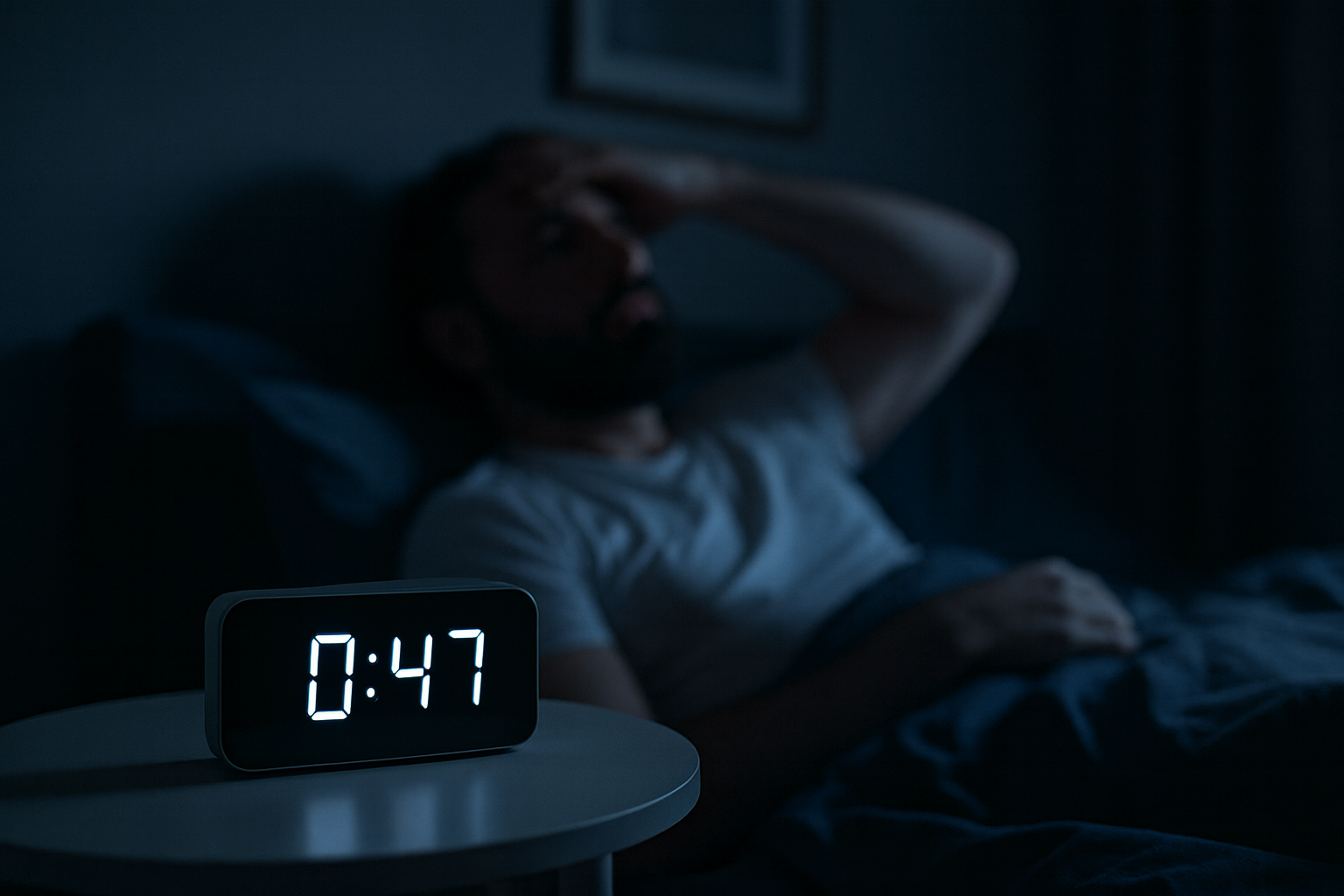
Many of the people we work with or come in contact with in Vancouver and BC describe the same day-to-day pattern. Their days feel rushed and demanding, while their minds remain constantly active. By the time they go to bed, their bodies are tired but their thoughts continue to race, making it difficult to fall asleep or stay asleep. They describe lying awake for long stretches, unable to fully settle.
This pattern eventually leads to mornings marked by exhaustion and irritability. The day then begins already under strain, with increased pressure to function, focus, and perform, and the cycle continues.
This pattern is actually quite common and the relationship between stress and sleep very well documented. The American Psychological Association describes the connection as a “two way street,” where each one intensifies the other. How we can understand how this cycle forms, can thus make it easier to change it.
Why stress makes it harder for us to fall sleep
When you are stressed, your body releases cortisol and adrenaline. These hormones help you respond to danger and pressure, but when stress is constant, they can interfere with the body’s ability to relax at night when its time to switch off. The National Institute of Mental Health notes that long-term activation of the stress response disrupts normal cortisol rhythms, which directly impacts sleep.
People often describe this as feeling tired yet wired. The mind reviews the day, plans tomorrow, or fixates on small moments that suddenly feel bigger at night. The Sleep Foundation confirms that stress increases nighttime rumination and reduces overall sleep quality.
How poor sleep then increases stress
Proper sleep is essential for healthy emotional regulation. Without enough rest, the brain struggles to process emotions or manage daily stress. Research published in Nature Human Behaviour found that even one night of poor sleep increases activity in the amygdala, the brain region responsible for emotional reactivity.
Consistent poor sleep can lead to:
increased irritability
reduced concentration
difficulty managing conflict
heightened sensitivity to stress
feeling on edge or overwhelmed
The National Library of Medicine reports that sleep deprivation raises cortisol levels, reinforcing the stress response and worsening insomnia. This is how the cycle thus strengthens itself.
How anxiety shows up at night
Anxiety feels the strongest in the evening for many people, even if the day itself did not feel overwhelming. At night, the world gets quieter, distractions fall away, and the mind finally has space to bring up thoughts that were pushed aside earlier. This is when worries become louder and more repetitive.
For some people, this means replaying conversations or worrying about how they appeared to others. For others, it means planning the next day endlessly or trying to solve problems in their head long after they should be resting. The body often reacts at the same time. The heart can beat faster, breathing can become shallow, or the chest can feel tight; anxiety can affect us physically in many different ways. Of course, these sensations make falling asleep feel even more difficult.
There is also the pressure of knowing that sleep is important that somehow makes falling asleep harder. People often lie in bed thinking, “If I do not sleep now, tomorrow will be impossible.” The Sleep Foundation notes that this kind of performance anxiety around sleep is one of the most common psychological patterns linked to chronic insomnia. Nighttime anxiety also feels more intense because the daytime distractions disappear. Stress from work, unresolved conflict, loneliness, or uncertainty about the future often rises to the surface as soon as things get quiet.
How counselling helps break the stress-sleep cycle
Counselling helps you understand the connection between your thoughts, emotions, and physiological stress responses so that these patterns at nighttime feel less overwhelming. It provides a space to notice what keeps your mind active at night and to explore healthier ways to navigate daily pressure.
Therapists support clients by helping them:
identify subtle stressors they may overlook
understand why their body remains activated at night
challenge thinking patterns that intensify nighttime worry
develop emotional regulation skills
build routines that encourage rest
One form of counselling, cognitive behavioural therapy for insomnia (CBT-I) is considered the gold standard for treatment by the American Academy of Sleep Medicine. But even when counselling does not follow a formal CBT-I protocol, many of its principles can still be integrated effectively. Other forms of counselling have also been shown to improve the stress-sleep cycle.
Wrapping it all up
Its important to remember that struggling with sleep is not a personal failure. In many cases, your body is simply doing what its meant to do when it has been working too hard for too long. Stress and sleep are naturally deeply connected. Support can help you interrupt the cycle by understanding these relationships and finding healthy ways forward.
Practical ways to interrupt the cycle
Here are some accessible steps that often help restore balance and improve overall sleep hygiene:
Create a gentle transition before bed: Even a short wind-down routine can make it easier to fall asleep and supports better overall sleep
Reduce stimulating activities at night: This includes work, screens, intense conversations, or anything that might overly stimulate your mind in the evening.
Notice recurring thought patterns: Therapy and reflections can help soften thoughts that keep your nervous system activated.
Use grounding techniques: Slow breathing, progressive muscle relaxation, or a warm shower can shift the body toward rest.
Address stress earlier in the day: Research shows that people who process stress proactively tend to sleep more consistently.

About the author: Kat Nienartowicz, BBA
Kat is a practicum counsellor at the Vancouver Therapy Collective whose integrative, body-aware approach supports clients in reducing stress, easing anxiety, and strengthening their relationship with their nervous system. She helps clients understand how chronic stress patterns show up in both the mind and body and how to shift them.
Much of Kat’s work focuses on helping clients break the loops of stress, worry, and physical tension that often disrupt sleep or keep the body in a state of alertness. She is especially interested in nervous system education and the dynamics of the stress-sleep cycle, and supports clients in developing practical tools to interrupt these patterns.
Accessible counselling options for insomnia at the Vancouver Therapy Collective
We offer low-cost counselling for adults who are struggling with stress, anxiety, and sleep difficulties in Vancouver or online anywhere in BC. For those looking for full cost counselling, our fully trained and experienced associate therapists are available.
Many people who experience insomnia feel stuck in patterns they cannot change on their own, and counselling provides a supportive space to understand what is happening in the body and mind. Our practicum counsellors and associates work with clients to explore the thoughts, habits, and stressors that keep sleep disrupted, and they help build routines that support a calmer transition into rest.
If you’re interested in learning more, we encourage you to book a free introduction call: